

Case Study · 2022-Present
trenntmap.de
Together for a better Berlin
Presentation of various sustainable places and events around Berlin.
Year
2022-Present
Services
Concept, Design & Development
Stack
Django, React, TailwindCSS, MapboxGL
01
Concept
Concept phase for Berlin Recycling GmbH
We have set ourselves the ambitious goal of reducing waste in Berlin for Berlin Recycling GmbH. We wanted to achieve this by showing citizens places where they can donate and sell used items. The main objective was to support the circular economy and make life in Berlin more sustainable. To achieve this, we have developed a web platform where users can enter locations or events related to the circular economy to reduce waste.
Technology and Design
The platform was developed with a powerful backend based on Django and has a customized geolocation database. An interface for Berlin Recycling GmbH staff has also been integrated, allowing them to manage locations and approve user-submitted information. In terms of design, we closely followed the Material UI principles and drew inspiration from the Airbnb platform.

Our approach
In the concept phase, we initially focused on understanding exactly what the end users expect and need from the solution. For this purpose, we created "User Journeys" to ensure that the client's business logic aligns with the users' needs. These "User Journeys" helped us visualize the entire process from the perspective of the end user and ensure that the platform is intuitive and user-friendly.
After we had defined a suitable "user journey", we conducted a competitive analysis. This helped us determine how our solution differs from others and what our unique selling proposition is. It also provided us with the opportunity to gather inspiration for the design phase and understand which features or approaches work best in the industry.
Another important step in this phase was the creation of rough "wireframes". These wireframes allowed us to identify potential issues with the concept early on and ensure that the user interface is both functional and aesthetically appealing.
SEO optimization was also a central part of this phase. We have extensively studied which choice of words is best suited and which technology works best to ensure that the platform is optimized for both users and search engines.
02
Design
Visual implementation with Figma
For the design phase, we used Figma, an advanced tool that allowed us to turn our ideas into realistic prototypes. The right design is crucial, as users on the internet decide within fractions of a second whether a website is appealing or unattractive.
Corporate Identity (CI) and Design Systems
A central element of our design work was to ensure that the Corporate Identity (CI) of Berlin Recycling GmbH was integrated into the solution. This ensures that the platform is not only functional but also consistent with the company's brand identity. We firmly believe in the principle of "Form follows function" and always strive to make the software as user-friendly as possible. In doing so, we strictly adhere to modern design systems such as Material Design, which served as our guide and was inspired by the Airbnb platform design. Such design systems help make our websites recognizable and easy to use.

Mobile Design and Responsiveness In today's digital world, 70% of websites are visited by mobile users. Therefore, it was of utmost importance for us to prioritize our mobile design and responsiveness. With Figma, we were able to ensure that our designs work flawlessly not only on desktops but also on tablets and smartphones. This guarantees a seamless user experience, regardless of the device used.

Target audience-oriented design
Another crucial aspect was the consideration of the target audience. Through the "User Journeys" created in the concept phase, we had a clear understanding of who our main users would be. This allowed us to create a design that is tailored specifically to the predefined individuals, whether it's the average citizen of Berlin who wants to live sustainably or the staff of Berlin Recycling GmbH who will use the platform for location management and user information approval.

Conclusion
The design phase was a critical step in our collaboration with Berlin Recycling GmbH. By combining user-centered design principles and the use of Figma, we were able to create a platform that is not only aesthetically appealing but also functional and user-friendly. With such a well-thought-out design, we are confident that the platform will successfully contribute to making life in Berlin more sustainable.
03
Development
Used technologies and their application
Django: Django is a powerful web framework based on Python. For this project, we used Django as the backend technology to create a robust and scalable platform. In particular, we integrated a customized geolocation database to provide users with accurate location information.
React: React is a leading frontend library that enabled us to create a reactive and user-friendly interface. With React, we were able to seamlessly integrate the data provided by Berlin Recycling GmbH and offer users a smooth interaction with the platform.
TailwindCSS: This utility-first CSS framework helped us to quickly and efficiently implement the design, which was closely aligned with the Material UI principles. It enabled us to create a responsive design that looks and functions equally well on different devices.
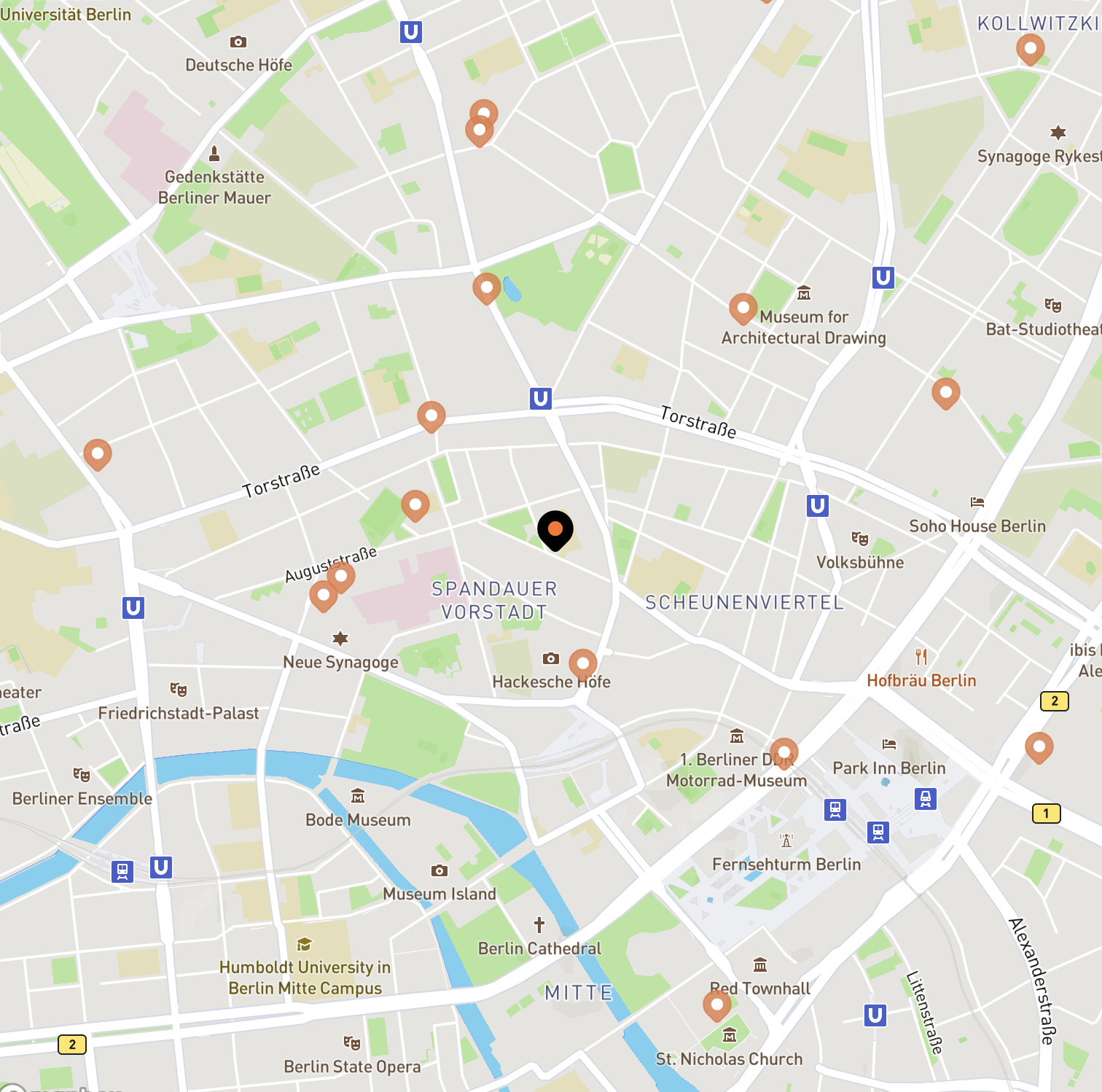
MapboxGL: To provide users with a visual representation of locations and events in the field of the circular economy, we used MapboxGL. This tool allowed us to integrate interactive maps into the platform, helping users easily find the desired locations.
Our approach and guiding principles
A central principle in this project was simplicity. We have found that unnecessary complexity not only prolongs development times but also increases costs. Therefore, we focused on prioritizing the user experience and aligning our technology selection accordingly.
By using advanced tools like Github's Copilot, we were able to continuously optimize our development process. Copilot helped us write code more efficiently and avoid common development issues, highlighting our commitment to efficiency and innovation.
Project result
The project was delivered on time and within budget. The combination of careful planning, the right technology stack, and a dedicated team led to a successful implementation. The platform we developed for Berlin Recycling GmbH will not only help reduce waste in Berlin but also raise awareness of the circular economy and make city life more sustainable.
Finally, we can proudly say that our work will make a real difference for the citizens of Berlin and the environment as a whole.
Ready for your
next web project
with Desent?
Tell us about your project — we will get back to you within 24 hours with an initial assessment and the next steps.